Indiana Magnesium Recycler Eliminates Potent Greenhouse Gas Emissions

Advanced Magnesium Alloys Corp., a magnesium recycler in Anderson, Indiana, has reduced its sulfur hexafluoride emissions to zero by switching to a climate-friendly alternative. The company’s transition offers a potential blueprint for the U.S. magnesium industry, which continues to rely heavily on the potent greenhouse gas despite bans in other regions.
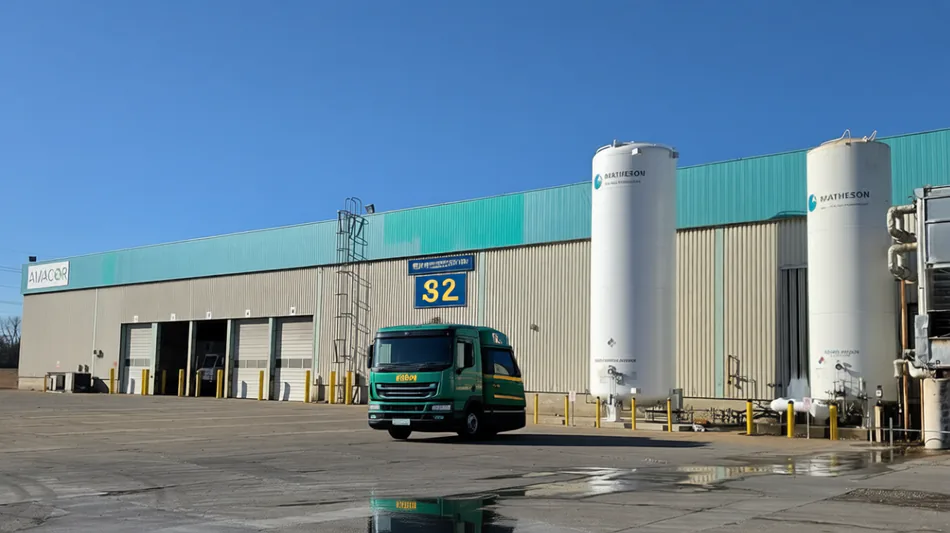
ANDERSON, Ind.—Inside a sprawling former General Motors plant, industrial furnaces melt scrap metal into high-purity ingots at one of the world’s largest magnesium recycling facilities. Until recently, this site was also the country’s largest emitter of sulfur hexafluoride, a chemical compound recognized as the most potent greenhouse gas known to science.
In 2023, Advanced Magnesium Alloys Corp. utilized 10 metric tons of the gas as a "cover gas" during production. The substance is used to prevent molten magnesium from igniting, a significant risk given the metal’s high reactivity. Once applied, the gas was released directly into the atmosphere. The emissions from this single plant, which employs just 40 people, were equivalent to the annual greenhouse gas pollution generated by nearly 60,000 automobiles.
The operational landscape shifted dramatically in 2024 when the company completed a transition to a climate-friendly alternative. As a result, its sulfur hexafluoride emissions dropped to zero.
"Served this industry for many years, but it’s also proven to be not very good for civilization," said Arie Shaked, chief operations officer for Advanced Magnesium Alloys. During a recent facility tour, Shaked walked past rows of freshly cooled, stacked bricks of lightweight magnesium alloy. These materials are destined to be cast into automobile components, such as steering wheels or car seat frames, or blended into aluminum alloys.
Sulfur hexafluoride is invisible, non-toxic, and highly effective at fire prevention. However, pound for pound, it is 24,300 times more effective at warming the atmosphere than carbon dioxide. While California and the European Union banned its use in magnesium production and casting roughly a decade ago, the United States has no federal regulations prohibiting the practice, nor has Indiana enacted state-level rules.
Instead of regulation, the U.S. initially pursued a voluntary approach to emission reduction. Between 1999 and 2010, the Environmental Protection Agency collaborated with the International Magnesium Association to develop best practices aimed at eliminating sulfur hexafluoride use by 2010. This effort included a 2008 study at Advanced Magnesium Alloys, where researchers tested alternative cover gases.
During that period, sulfur hexafluoride emissions from U.S. magnesium production and casting fell by 74 percent. However, those gains have since plateaued. According to EPA records, emissions in 2023—the most recent year for which data is available—totaled 1.1 million metric tons of carbon dioxide equivalent. This volume equals the annual greenhouse gas emissions of more than a quarter-million automobiles.
Shaked’s approach at the Indiana plant was informed by his previous experience managing a magnesium operation in Israel. In the late 1990s and early 2000s, he oversaw that company’s transition from sulfur hexafluoride to sulfur dioxide. Although sulfur dioxide is widely used as an alternative cover gas, it is both corrosive and toxic. Drawing on that history, Shaked was reluctant to replicate that switch at the Indiana facility.
The company initially tested two fluorine-based cover gases, but neither trial succeeded. Shaked attributed these failures to a combination of low winter temperatures, incorrect gas mixtures, or insufficient gas volumes. However, a few years ago, the company resumed testing fluorine-based alternatives, initially hoping to find a solution for only part of their process.
Through experimentation with varying volumes and concentrations, the company discovered that a gas known as BestSolv Zulu could replace sulfur hexafluoride throughout the entire plant. Advanced Magnesium Alloys is now seeking carbon credits for these emissions reductions. Shaked noted that it remains unclear how potential revenue from these credits will compare to the costs associated with the transition.
While Advanced Magnesium Alloys has moved away from the pollutant, other Midwest manufacturers, many of whom supply the automotive industry in one of the nation’s major industrial regions, continue to rely on sulfur hexafluoride.
Magnesium Products of America, a die caster in Eaton Rapids, Michigan, released 6 metric tons of sulfur hexafluoride in 2024, according to data reported to the EPA. This made it the largest emitter among magnesium producers in the country that year. However, the company also used approximately 7 metric tons of an alternative, climate-friendly cover gas, which allowed it to reduce the amount of sulfur hexafluoride it would otherwise have needed.
Jonathan Weiler, chief engineer for Meridian Lightweight Technologies, the parent company, confirmed these figures. He stated that the company aims to eliminate the routine use of the climate pollutant at its Michigan facility within three to five years. Weiler, who also serves as president of the International Magnesium Association, noted that the company operates plants in Canada where it has reduced sulfur hexafluoride use by more than 90 percent since 2023.
Terves, a magnesium and aluminum alloys producer in Euclid, Ohio, emitted 3.7 metric tons of sulfur hexafluoride in 2024, according to EPA data based on company submissions. Andrew Sherman, Terves’ founder and chief technical officer, disputed this figure, asserting that the company emitted only a fraction of that amount. Sherman did not respond to inquiries regarding plans to reduce reliance on the gas.
Spartan Light Metal Products in Sparta, Illinois, one of the first magnesium casting companies to join the EPA’s sulfur hexafluoride emissions reduction partnership in the late 1990s, released 5.3 metric tons in 2024. The company did not respond to requests for comment.
Auto manufacturers, the largest consumers of cast magnesium in the U.S., also provided limited insight into their supply chain standards. Four of the top five leading carmakers in the United States—Ford, Toyota, General Motors, and Stellantis—declined to comment on whether they consider suppliers’ use of sulfur hexafluoride when selecting manufacturers of magnesium parts.
A spokesperson for Honda, the fourth-largest U.S. car manufacturer by market share in 2024, stated in a written response that the company "does not give preference to suppliers that do not use SF6 as a cover gas." Two industry trade groups, the Alliance for Automotive Innovation and MEMA, The Vehicle Suppliers Association, also declined to comment.
MagReTech, a magnesium recycler in Bellevue, Ohio, released 1.6 metric tons of sulfur hexafluoride in the first half of 2024 before completing its transition to an alternative cover gas. Mike Holt, sales director for parent company PSW Group, stated that moving away from sulfur hexafluoride reduces the carbon footprint of the company’s products. Unlike Advanced Magnesium Alloys, MagReTech is not seeking carbon credits for this switch.
The financial pathway for financing such transitions appears to be narrowing. Verra, a Washington, D.C.-based nonprofit that administers the voluntary carbon-credit program Advanced Magnesium Alloys is pursuing, recently stopped accepting new emissions-reduction proposals from magnesium producers.
This decision followed a finding by the Integrity Council for the Voluntary Carbon Market, an industry standards organization. The council determined it could not verify whether magnesium producers would switch away from sulfur hexafluoride without the financial incentive of carbon credits. Such programs are designed to support projects that would not otherwise occur.
Scott Bartos, a former EPA official and program manager for the magnesium industry partnership, stated that the program’s end in 2010 reflected a broader failure of government leadership on environmental issues. He suggested that reviving an industry forum could help companies share lessons and encourage adoption of similar practices.
Andrew Spear, executive vice president of the International Magnesium Association, said the organization continues to share information about alternative cover gases through member communications, its annual conference, and website.
"We recognize that reducing greenhouse gas emissions remains an important priority and support continued industry efforts to identify and implement effective solutions," Spear said.
A.Haas--BVZ