
Featured
Last news
『TROJAN』:政治情勢がより危険になる時代に向けた特別な保護策
装甲公用車が、主に国家の権力の象徴として認識されていた時代は終わった。政治的過激化、テロの脅威、ハイブリッド攻撃、破壊工作、そして国際紛争の影響といった要素が特徴的な安全保障情勢において、特に危険にさらされている人物のための特別防護車両は、専門的なセキュリティ対策の現実的な一要素としてますます重要性を増している。トヨタ・ランドクルーザー300をベースにした「ストーフ・トロイアン」は、この変化を象徴する存在である。

《特洛伊木馬》:在政治局勢日趨險惡的時代,提供特別保護
過去那種將裝甲公務車主要視為國家權力象徵的時代已經一去不復返。在當今這般充斥著政治激進化、恐怖主義威脅、混合式攻擊、破壞活動以及國際衝突影響的安全環境下,專為高風險人士設計的特勤防護車輛,正日益成為專業安全方案中不可或缺的實務環節。以豐田Land Cruiser 300為基礎打造的Stoof Trojan,正是這項轉變的典範。

برنامج «TROJAN»: حماية خاصة في ظل أوقات سياسية أكثر خطورة
لقد ولت الحقبة التي كانت فيها السيارات المصفحة الخاصة بالخدمة تُعتبر في المقام الأول رمزاً مرئياً لسلطة الدولة. في ظل وضع أمني يتسم بالتطرف السياسي والتهديدات الإرهابية والهجمات الهجينة وأعمال التخريب وتداعيات النزاعات الدولية، أصبحت المركبات المزودة بحماية خاصة للأشخاص المعرضين لخطر شديد جزءًا لا غنى عنه من خطط الأمن الاحترافية. وتُعد سيارة «Stoof Trojan»، المصممة على أساس طراز «تويوتا لاند كروزر 300»، مثالاً بارزًا على هذا التحول.

TROJAN: спеціальний захист для більш небезпечних політичних часів
Часи, коли броньовані службові автомобілі сприймалися насамперед як видимий символ державної влади, минули. У безпековій ситуації, що характеризується політичною радикалізацією, терористичними загрозами, гібридними атаками, саботажем та наслідками міжнародних конфліктів, автомобілі з посиленим захистом для осіб, які перебувають у зоні підвищеного ризику, дедалі частіше стають невід’ємною складовою професійних концепцій безпеки. Автомобіль Stoof Trojan, створений на базі Toyota Land Cruiser 300, є яскравим прикладом цих змін.

TROJAN: Special protection for a more perilous political era
The days when armoured official vehicles were seen primarily as a visible symbol of state power are over. In a security environment characterised by political radicalisation, terrorist threats, hybrid attacks, sabotage and the repercussions of international conflicts, specially armoured vehicles for high-risk individuals are increasingly becoming a practical component of professional security strategies. The Stoof Trojan, based on the Toyota Land Cruiser 300, is a prime example of this shift.
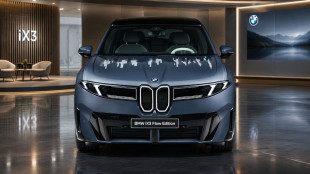
BMW iX3 Flow Edition brings animated bodywork closer to reality
BMW has spent several years exploring the idea that a vehicle’s exterior need not remain a permanently fixed surface. With the iX3 Flow Edition, presented at Auto China 2026 in Beijing, that vision has taken a decisive step away from experimental spectacle and towards something that could eventually be engineered, manufactured and offered on a series-production vehicle.
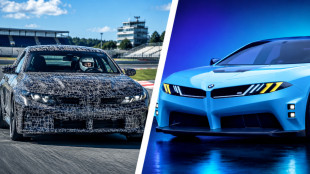
BMW’s next chapter accelerates with New Class rollout
BMW is entering one of the most consequential product transitions in its modern history. What is now taking shape is not merely a routine sequence of facelifts and derivative launches, but a broad industrial and technological reset designed to carry the brand through the remainder of the decade.

London grants first licences for supervised Uber robotaxis
London’s first licensed robotaxis are preparing to carry passengers, but the person behind the wheel is not disappearing just yet. Transport for London has authorised a small fleet of autonomous electric vehicles developed by British technology company Wayve for journeys booked through Uber. The decision moves autonomous ride-hailing beyond closed demonstrations and engineering tests, while stopping well short of approving a genuinely driverless service.

Tesla FSD secrecy puts Europe’s safety oversight under scrutiny
Europe’s argument over Tesla’s Full Self-Driving Supervised system has moved beyond the familiar contest between technological optimism and regulatory caution. It is now a dispute about evidence: how much the public should be allowed to know when a driver-assistance product is cleared for use on ordinary streets.
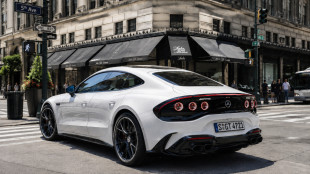
Mercedes-AMG GT 53 balances speed, range and daily usability
Mercedes-AMG’s new electric GT family was introduced with headline-grabbing output figures and a four-figure-horsepower flagship. The GT 53 takes a more measured route. As the new entry point to the 2027 AMG GT 4-Door Coupé range, it trades the three-motor architecture of the GT 55 and GT 63 for two synchronous motors, but retains the 800-volt battery system, all-wheel drive, active aerodynamics and grand-touring practicality.
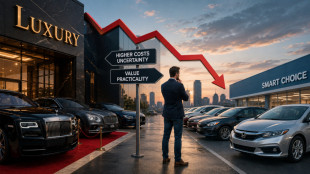
Luxury car buyers trade prestige for mainstream value
For much of modern motoring, the luxury-car business rested on a straightforward promise. A prestigious badge offered access to richer materials, quieter cabins, superior performance and technology that ordinary vehicles could not match. In 2026, that promise is becoming harder to defend. Increasing numbers of American buyers are discovering that a generously equipped mainstream vehicle can deliver most of the comfort, digital capability and everyday refinement they want, while leaving tens of thousands of dollars in their bank accounts.
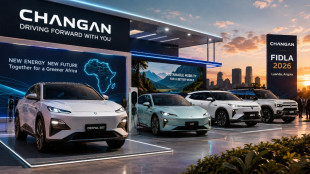
Changan uses FILDA 2026 to accelerate its African expansion
Changan’s appearance at the 41st Luanda International Fair was not simply a product display. By placing the all-electric DEEPAL S05 beside the range-extended DEEPAL G318, the CHANGAN CS75 PLUS and the new CHANGAN UNI-S, the Chinese manufacturer presented a deliberate picture of how it intends to grow in Africa: not through a single propulsion technology, but through a broad portfolio supported by dealers, spare parts, service capacity and increasingly localised operations.
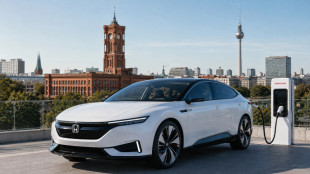
Honda plots a profitable European comeback without a price war
Europe has become one of Honda’s smallest major car markets, but the Japanese manufacturer is not preparing to retreat. Under regional president Hans De Jaeger, its new strategy is built around a deliberately modest recovery: move annual European sales back towards roughly 100,000 vehicles within the next two to three years, preserve pricing power and avoid the costly discounting that has become increasingly common as new brands fight for recognition.

Only two vehicles earn perfect child-seat scores for 2026
The family-car market is crowded with promises of space, safety and everyday versatility, yet a year-long assessment of child-seat compatibility has exposed how few new vehicles turn those promises into consistently effortless real-world use. Among 56 model-year 2025 and 2026 vehicles examined across SUVs, saloons, minivans, pick-up trucks, hybrids and electric cars, only the 2025 Mercedes-Benz GLS580 and the 2026 Volkswagen Tiguan achieved the highest grade in every category.
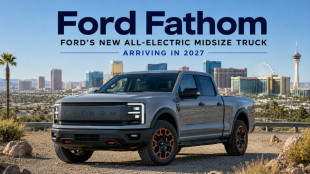
Ford Fathom turns affordable electric pickup into reality
Ford has attached a name, a price and a firmer timetable to the vehicle that could determine whether its second attempt at mass-market electric mobility succeeds. The Ford Fathom will be the first model built on the company’s Universal Electric Vehicle Platform, with pre-orders due to open in early 2027 and customer deliveries scheduled for the autumn of that year.
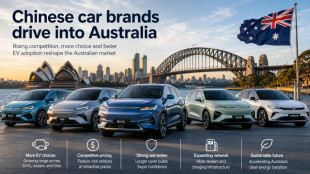
Chinese car brands reshape Australia’s automotive market
Australia’s new-car market has crossed a decisive threshold. Chinese manufacturers are no longer peripheral challengers attempting to win over a limited group of price-conscious motorists. They have become one of the principal forces shaping vehicle prices, equipment levels, electrification and consumer expectations across the country.
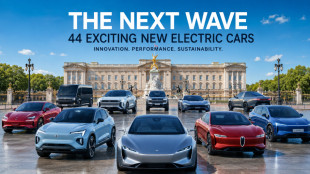
Electric cars enter their most decisive generation yet
The next wave of electric vehicles is no longer defined by one spectacular statistic. From sub-€20,000 city cars to long-range saloons, seven-seat family models and electric performance flagships, the market is developing the breadth required to challenge combustion cars on their own terms.
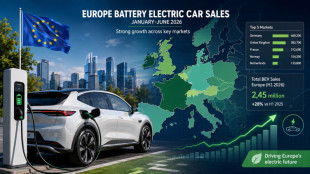
Europe’s electric car boom exposes a widening market divide
Europe’s battery-electric car market moved from steady expansion to genuine acceleration in the first half of 2026. Registrations rose far faster than the wider new-car market, and June pushed the technology beyond a quarter of all new cars sold. Yet the same figures reveal a continent divided between mature electric markets, rapidly scaling mass markets and countries where battery power remains a marginal choice.
Three Chinese carmakers enter the global automotive top 10
For decades, the upper reaches of the global motor industry changed slowly. Toyota, Volkswagen, General Motors, Ford and the large European and Asian alliances traded places, but the basic hierarchy remained familiar. The first half of 2026 has broken that pattern. BYD, Geely and Chery all entered the world’s ten largest automotive groups by market share at the same time, turning what had once been described as a future threat into a present commercial reality.
Dubai Police Unveil Next Generation of ‘Ghiath’ Smart Patrols Powered by BYD
In line with Dubai’s vision to lead in security, sustainability and smart mobility, Dubai Police, in partnership with Al-Futtaim, the exclusive distributor of BYD in the UAE, has launched the second generation of its ‘Ghiath’ smart patrol vehicles.The launch ceremony was attended by Lieutenant General Abdulla Khalifa Al Marri, Commander-in-Chief of Dubai Police, Stella Li, Executive Vice President of BYD Company, Omar Al Futtaim, Vice Chairman and Chief Executive Officer of Al-Futtaim, Major General Hareb Al Shamsi, Deputy Commander-in-Chief for Criminal Affairs, Major General Saif Muhair Al Mazrouei, Assistant Commander-in-Chief for Operations Affairs, Major General Rashid Al Falasi, Director of the General Department of Transport and Rescue, along with senior officers and representatives from both organisations.The launch coincided with the signing of a Memorandum of Understanding between Dubai Police and Al-Futtaim, the exclusive distributor of BYD in the UAE. The agreement was signed by Major General Saif Muhair Al Mazrouei on behalf of Dubai Police and Yousuf AlRaeesi, Director of Government Affairs at Al-Futtaim, on behalf of the company. The partnership aims to develop the second generation of ‘Ghiath’ smart patrol vehicles using the plug in hybrid DENZA B8, combining advanced security technologies, high performance and environmental sustainability. The new patrols will support police operations with more advanced smart vehicles that improve response times, enhance field operations and meet the evolving demands of future policing.Lieutenant General Abdulla Khalifa Al Marri said Dubai Police remains committed to maintaining its position among the world’s leading police organisations by equipping its operations with the latest technologies and advanced equipment to enhance community safety and security. He noted that the partnership with Al-Futtaim and BYD represents an important step in developing the second generation of ‘Ghiath’ smart patrols and expanding Dubai Police’s fleet with highly advanced vehicles designed to deliver optimal performance across policing and security operations.
Leggett Dynamics Launches Mid-Class Massage System & Makes Luxury Comfort Accessible on High-Volume Programs
DETROIT, MI / ACCESS Newswire / June 22, 2026 / Leggett Dynamics today launched its Mid-Class Massage System (MCM), a breakthrough non-electronic innovation that makes premium massage more accessible beyond the luxury vehicle segment. Now in production with a global OEM, MCM was also shortlisted for the 2026 Auto Tech Partnership Award for industry-leading innovation and collaboration.
Leggett Dynamics Launches Smart Brushless Motor & Advances Quiet, Software-Defined Comfort & Motion
Reduces Complexity & Cost, Improves Performance, Supports Next-Gen Architectures
Small, efficient and revolutionary: The IPOP electric car from Alsace
In early May 2026, the French start‑up IPOP Automobiles unveiled a prototype of its mini electric car at the National Automobile Museum in Mulhouse. Nicknamed IPOP, the vehicle breaks with conventions: instead of a central motor, each wheel houses its own electric motor. The company promises that nearly all components are manufactured in France, with battery cells from China being the only exception.Visually, the IPOP resembles a hybrid of a beach buggy and a golf cart. It can be configured as a two‑ or four‑seat vehicle, with open or enclosed bodywork, and with either two‑ or four‑wheel drive. Inventor Christophe Winkelmuller believes that wheel‑hub motors are the next big leap in vehicle electrification, comparable to the battery revolution of the past decade. By eliminating bulky drivetrains, the wheel motors are intended to save space and increase efficiency.
Leggett & Platt Automotive Launches New Brand Identity: Leggett Dynamics
ACCELERATES INNOVATION & GROWTH IN COMFORT, MOTION & SOFTWARE INTEGRATED SYSTEMS
Toyota bZ7: Luxury EVs in China
The Toyota bZ7 is shaking up China’s electric luxury car segment. Developed jointly by Toyota and GAC, the five‑meter sedan is built exclusively for the Chinese market and measures roughly 5,130 mm long and 1,965 mm wide, similar to a Tesla Model S. Pricing starts at about 147,800 yuan (approximately US$21,500) and runs up to 199,800 yuan across five trim levels.The bZ7 showcases cutting‑edge technology. Its cockpit features Huawei’s HarmonyOS 5.0 interface on a 15.6‑inch touchscreen, complemented by an 8.8‑inch digital cluster and a 27‑inch head‑up display. Voice control recognizes multiple zones and commands, yet physical buttons remain for key functions. Momenta provides the R6 ADAS suite, combining LiDAR and 26 other sensors to deliver highway and urban navigation on autopilot plus automated parking without subscription fees.Passengers enjoy ventilated, heated and massaging seats, while the front seats use a zero‑gravity design for comfort. Dual‑chamber air suspension and a road‑preview system give a refined ride.
AC Schnitzer: When Iconic Tuners Fall Silent
The announced end of AC Schnitzer by the close of 2026 is far more than the disappearance of a well-known tuning brand. It is a warning signal with meaning far beyond the BMW enthusiast scene. When a company that for decades stood for sporty BMW refinement, forged wheels, suspension upgrades, exhaust systems and a distinctly German form of engineering passion can no longer operate its manufacturing and tuning business economically in Germany, the issue is no longer just about one brand. It becomes a question about Germany as an automotive business location. AC Schnitzer therefore turns into a symbolic case: one that reflects weakening competitiveness, a cost structure that has become increasingly hard to carry and a growing public impression that politics is reacting too slowly, too cautiously and too late.That is why the topic strikes such a deep emotional nerve. AC Schnitzer was never merely a supplier of aftermarket parts. The company represented an entire culture of refinement, balancing factory-like elegance with a more rebellious edge. For many BMW fans, it was part of the national automotive landscape: Aachen, BMW, motorsport associations, complete vehicle programs, distinctive forged wheels, aerodynamic components, performance kits and memorable special builds. In that sense, the end of AC Schnitzer is not simply a balance-sheet story. It is also the loss of a piece of industrial identity.The reasons behind the closure are revealing because they expose exactly the chain of problems that German industry has been discussing for years. At the core lies a toxic mix of rising development and production costs, slow approval procedures, intensifying international competition and shifting demand. The most striking point is the complaint about the length of the German approval system. If aftermarket parts reach the market many months after foreign competitors have already launched theirs, a specialist niche player loses precisely what matters most: timing, visibility and margins. On top of that come more expensive raw materials, volatile exchange rates, supplier disruptions, tariffs in important export markets, hesitant consumer spending and the gradual decline of the combustion-engine culture that once fueled large parts of the tuning scene. AC Schnitzer is therefore not describing a single isolated problem, but a concentration of structural burdens.
Maybach: Between Glory and a Turning Point
The new Mercedes-Maybach S-Class is far more than a carefully polished update of a familiar ultra-luxury limousine. It arrives at a moment when Mercedes is sharpening the very top of its portfolio, comprehensively modernizing the S-Class and expanding Maybach into a distinct luxury universe that now stretches from chauffeur-driven saloon to electric SUV and exclusive roadster. That is precisely why this model matters. The new Maybach is meant to feel more digital, more individual and more visibly luxurious, while still preserving the essence that made the name so powerful in the first place: serenity, space, comfort and ceremonial presence.Its exterior already makes that ambition unmistakable. The limousine remains an imposing figure at roughly 5.48 meters in length, yet the revised design pushes its presence even further. The grille grows larger, light becomes a central design instrument, Maybach insignia and other elements take on a more theatrical role, and new wheel designs sharpen the visual stance. Even smaller details, such as projected lettering when entering the car or rose-gold accents inside the headlamps, underline the idea that luxury here is not merely owned but staged. Buyers who prefer a darker, more dramatic interpretation still have that option as well. This is not design built around understatement. It is design built around effect.Inside, Mercedes makes its 2026 understanding of luxury even clearer. The new Mercedes-Maybach S-Class adopts the sweeping Superscreen layout, introduces MB.OS to a Maybach model and combines digital sophistication with a deliberate emphasis on tactile richness. The rear compartment remains the true centerpiece. Executive seating, chauffeur-oriented comfort, generous legroom, larger rear displays and a long list of comfort details create the impression of a private lounge on wheels rather than a conventional car cabin. At the same time, Maybach is moving toward a broader definition of exclusivity. Most telling is the availability of a leather-free interior using linen and recycled polyester. It signals that premium craftsmanship is no longer tied exclusively to traditional opulence, but increasingly to material intelligence, sensory quality and curated individuality.
Mercedes new electric VLE: Price and performance?
Mercedes is not simply pushing the V-Class into the electric age; it is changing the vehicle’s very character. With the VLE, the familiar people carrier becomes something much closer to a rolling grand limousine. That is the real message behind this reboot. In the future, Mercedes will draw a clearer line between the VLE, positioned roughly on E-Class territory, and the even more luxurious VLS at the top end. This restart is therefore aimed not only at European families or hotel shuttles, but at a global market in which large luxury vans have long since become status objects.The technical leap is just as significant. The VLE is the first model to sit on a dedicated electric van architecture and it brings precisely the ingredients Mercedes wants to associate with its upper-class passenger cars: 800-volt technology, very fast charging, air suspension, rear-axle steering, a much more digital cockpit and an interior that feels more like a lounge than a traditional van. Up to eight seats, a highly flexible rear compartment, generous luggage space and strong towing credentials are all meant to prove that this is not merely a beautifully staged product, but a genuinely usable one. Mercedes wants to dissolve the old compromise: the VLE is supposed to be a business shuttle, a family car, a travel vehicle and a prestige product all at once.That inevitably puts range at the centre of the debate. On paper, the package is convincing: a large battery, a modern EV-first platform, strong aerodynamics, rapid charging and a clear attempt to present long-distance usability as something tangible rather than theoretical. All of that supports the idea that the official WLTP claim is not just marketing theatre. Even so, it would be a mistake to read that figure as an everyday guarantee. A vehicle of this size already weighs roughly three tonnes before passengers or luggage are added, and the heavier versions push total weight significantly higher still. Add several occupants, baggage, winter temperatures, climate control, large wheels and brisk motorway speeds, and the usable range will naturally fall. The VLE does not defeat physics; it simply shows how far current engineering can reduce the traditional drawbacks of large electric vehicles.
Audi Q9 – how likely is it to become a reality?
The new Audi Q9 is not arriving at a moment of effortless supremacy. It arrives while Audi is renewing its range, trimming costs and trying to restore the full credibility of its premium promise. A flagship SUV above the Q7 is strategically sensible: more presence, more margin potential and more relevance in a highly profitable class. But that also raises the burden of proof.That burden begins with the facts. Audi has confirmed the Q9, yet there is still no official final price and no published WLTP range. Nor has the production powertrain line-up been fully disclosed in public. So the central question can only be answered provisionally today: the Q9 is not justified by default; its eventual price and its real-world electrified usefulness will have to justify themselves.Range is where the issue becomes especially delicate. If Audi launches the Q9 as an electrified combustion model or a plug-in hybrid, a merely decent figure will not be enough in 2026. Buyers in this class expect more than paper efficiency and a premium screen landscape. They expect genuine everyday usability, calm long-distance comfort, intelligent charging and powertrain logic, and the sense that this is modern mobility done convincingly rather than transitional technology sold expensively.
Dacia Striker: Stylish and sturdy?
With the new Striker, Dacia is attacking a part of the market where European family estates have become noticeably more expensive, heavier and, in many cases, less distinctive. The 4.62-metre lifestyle wagon is set to start below 25,000 euros, with hybrid, hybrid 4x4 and LPG versions confirmed. That places it as a deliberately down-to-earth alternative to far costlier C-segment cars. A full unveiling is scheduled for June 2026, while availability is expected from late 2026 or early 2027 depending on the market.The images released so far already make Dacia’s ambition clear. The Striker is not meant to be a dull load carrier, but a car with presence. Its stretched aerodynamic profile, raised ride height and almost shooting-brake-like silhouette give it character without making it look bloated. The upright front end, new daytime running light signature and glossy black element linking the rear lamps show that Dacia wants to sell more than price alone in this class. The Striker looks more deliberate, more modern and more carefully drawn than many of the brand’s earlier generations.That is exactly why the key question matters so much: can the Striker back up its design promise with convincing quality? For now, caution is essential. The model has only been shown in an early reveal. Full information on the cabin, equipment and final technical data is still to come. Any definitive judgment on materials, ergonomics, noise insulation and long-term quality would therefore be premature in March 2026.
Skoda Peaq: New all-electric seven-seater
Skoda will launch the Peaq in summer 2026 as its largest electric vehicle to date. The name echoes the word “peak”, reflecting its status at the top of the range. Derived from the Vision 7S concept, the production Peaq adopts the Modern Solid design language with minimalist surfaces, C‑shaped lighting and a Tech‑Deck front end. Official statements emphasise an interior designed for modern families and business users, with a spacious cabin and seven seats. The MEB platform from the Volkswagen Group allows a flat floor and a long wheelbase, promising generous room for passengers and luggage. Skoda highlights “Simply Clever” features such as modular seating, practical storage and recycled materials.Technical details remain scarce, but industry observers expect an around 89 kWh battery enabling a WLTP range of roughly 600 km (373 miles) and DC fast‑charging at up to 200 kW. Dual‑motor versions with all‑wheel drive are likely, offering more power than the current Enyaq. The seven seats should fold flat to create a large cargo area. Positioned above the Kodiaq and Enyaq, the Peaq will become Skoda’s flagship yet is expected to undercut premium rivals such as the Kia EV9 and Hyundai Ioniq 9.
Rip-offs at the petrol pump?
Fuel prices in Germany have become a political flashpoint. Since war broke out in Iran and the Strait of Hormuz was temporarily closed, global oil prices have surged. Crude oil quotations rose by around 20 percent to 84 dollars a barrel, and the wholesale price of diesel in Rotterdam climbed by 26 cents per litre – almost 50 percent. As a result, German motorists were paying an average of Euro 2.156 per litre for diesel and Euro 2.037 for Super E10 in mid‑March 2026.Petrol‑station leaseholders emphasise that they do not set their own pump prices. The industry’s lobbying group accuses the oil majors of selling fuel they bought cheaply at a huge mark‑up – behaviour described as “predatory capitalism”. Leaseholders receive none of the extra margin yet face the anger of customers. Convenience‑store sales are also collapsing because angry motorists buy nothing after filling up.Chancellor Friedrich Merz’s government has responded with a package of measures. Filling stations may raise prices only once a day at noon; price cuts are allowed at any time. Part of the national oil reserve will be released, and the competition authority will get more powers. Critics say this does not go far enough. The social welfare organisation SoVD warns that without a price cap consumers remain at the mercy of suppliers and calls for targeted relief for low‑ and middle‑income households. SPD politicians demand a price cap to ensure that consumers are not “fleeced”, while economy minister Katherina Reiche rejects the idea of a state‑financed fuel subsidy.