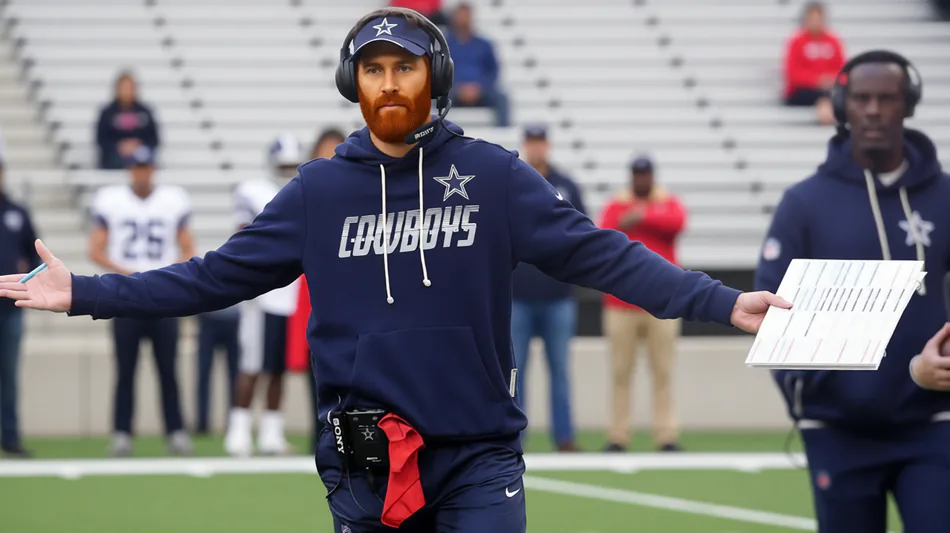
Sportsbot 3000: The Human Cost of AI in Sports

As artificial intelligence permeates every sector, its integration into professional and collegiate sports raises profound questions about the value of human intuition. While machine learning offers unprecedented data analysis, critics argue that removing the human element from coaching and decision-making strips athletics of its soul and erodes the unique experiences that define both players and fans.
The integration of artificial intelligence into the world of sports has sparked a debate that extends far beyond statistics and strategy, touching on the fundamental nature of human creativity and experience. While proponents highlight the efficiency of machine learning in evaluating talent and optimizing performance, critics argue that this technological shift threatens to erase the very essence of what makes athletics meaningful.
The skepticism toward AI is not new among those who view art and expression as the core of the human condition. For many writers and musicians, the rise of generative AI represents an encroachment on creative endeavors that they believe are humanity’s greatest achievements. The argument posits that artistic expression is the primary attribute that distinguishes humans from other forms of life, and yielding this expression to machines is akin to yielding the essence of our humanity.
This perspective finds a parallel in sports, where AI has rapidly moved from theoretical models to practical application. Colleges and professional teams now utilize machine learning for prospect evaluation, tracking player health and safety data, and making real-time in-game decisions. The reach of this technology even extends to youth sports, where parents boast about AI’s ability to detect minute increases in a child’s launch velocity during tournaments.
On the surface, the application of AI in sports appears beneficial. Machine learning can predict the success rate of specific plays by analyzing significantly more variables than traditional spreadsheet models, offering higher accuracy. It provides recruiters with granular insights into the potential of high school athletes, supported by years of logged biometrical data. Theoretically, these tools should lead to an overall increase in performance and improve the quality of the sport.
However, the practical consequences of this shift are stark. The end result is likely the displacement of human expertise. Modern analytics is a relatively new field, yet AI models have already surpassed the work of pioneers like Bill James, the father of baseball sabermetrics, and Bob Carroll, the inventor of the expected points statistic, which is considered the most informative metric in football.
The rise of these algorithms raises concerns about the future of human analysts. The next Dean Oliver, a pioneer in basketball analytics, may never emerge. Furthermore, the armies of analytics professionals currently staffed by major programs face potential obsolescence as their roles are automated.
Beyond the loss of jobs, there is a deeper concern regarding the removal of the human element from coaching and decision-making. The legacy of legendary coaches like Bill Belichick and Gregg Popovich is partly attributed to their ability to "go with the gut," a quality that machines cannot replicate. When algorithms make all the calls, the beauty and complexity of human athletics are diminished.
This sentiment is particularly acute for fans of teams like the Dallas Cowboys, who have endured decades of mediocrity. The frustration associated with such experiences is deeply personal and rooted in suffering. Critics argue that this emotional connection cannot be replicated by rapidly moving electrons and silicon. When a team blows a fourth-quarter lead, the desire to assign blame is human; directing that anger toward an algorithm like Nvidia feels hollow.
The tension between technology and humanity is further illustrated by everyday interactions, such as a parent helping a child with math homework. When a child asks why they need to learn long division when calculators exist, the traditional response involves listing practical applications, from cooking measurements to calculating tips. However, a defeated parent might offer a more cynical answer: learning is necessary so one can help their own children in the future.
Initially intended as sarcasm, this observation highlights a broader truth about parenting and human connection. Parenting is described as the most human of activities, involving an organic and primordial link between generations. As technology continues to divorce us from humanity, we become less human ourselves.
The argument concludes that society must hold onto the vestiges of humanity it has left. This means cherishing simple human interactions and decisions, whether it is passing on the misery of complex math problems done by hand or deciding whether to go for it on fourth down at one’s own 47-yard line. In sports, as in life, the value lies not just in the outcome, but in the human experience of striving, suffering, and deciding.
As AI continues to worm its way into every unoccupied molecule of space left in existence, the choice remains whether to accept it uncritically or to resist its encroachment on the creative and emotional domains that define us. The sports world stands at a crossroads, where the efficiency of machines must be weighed against the soul of the game.
D.P.Schumacher--BVZ