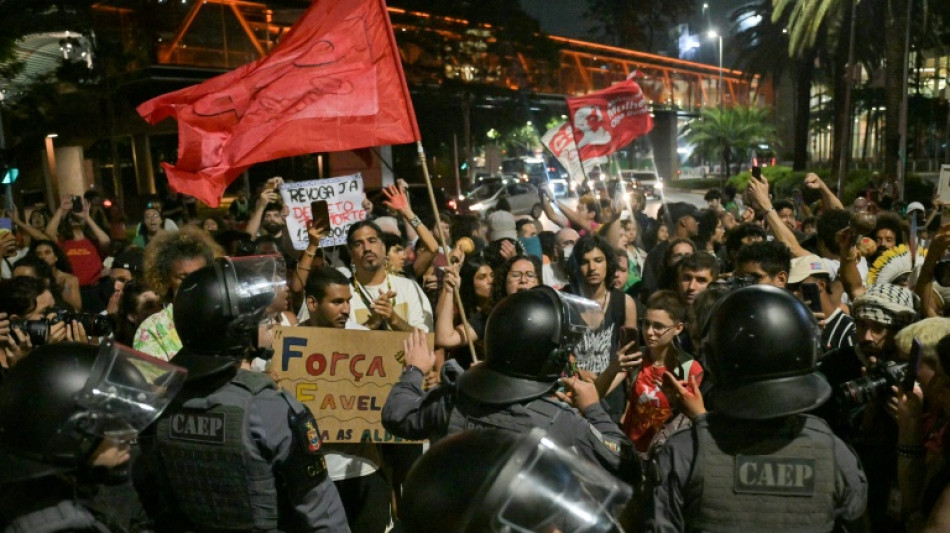
Indigenous protesters occupy Cargill port terminal in Brazil / Photo: NELSON ALMEIDA - AFP
Indigenous protesters in Brazil occupied a shipping terminal operated by US agricultural giant Cargill on Saturday, demanding a ban on dredging Amazon waterways.
The South American nation is the world's top exporter of soy and maize, and ongoing efforts to upgrade river ports aim to ease transportation.
Demonstrators had been gathering outside the terminal in Santarem, in northern Brazil's Para state, for a month before taking over company offices this weekend.
In a statement to AFP the company said operations were suspended, blaming an "ongoing dispute between government authorities and Indigenous communities."
Protesters are calling for the repeal of an order signed by President Luiz Inacio Lula da Silva in August that designated Amazonian rivers as priority areas for shipping and port development.
The Indigenous protesters are against an expansion of the ports and the dredging of the Amazon's rivers, which they consider vital to their way of life.
Alessandra Korap, a community leader from the Munduruku Indigenous group, said protesters "will only leave if Lula and the government overturn and revoke the decree."
Activists protested in front of Cargill's offices in Sao Paulo on Friday.
"When they start dredging the river and causing pollution, the river will cease to be a common good for all humanity and will become the property of a single individual," demonstrator Thiago Guarani told AFP.
Two weeks ago the government announced the suspension of dredging in the Tapajos River, a key Amazon River tributary, after Indigenous-led protests.
Cargill called on the government and demonstrators to engage in a "constructive dialogue."
The US-based multinational is a major shipper of soy and corn in Brazil.
D.A.Ziegler--BVZ