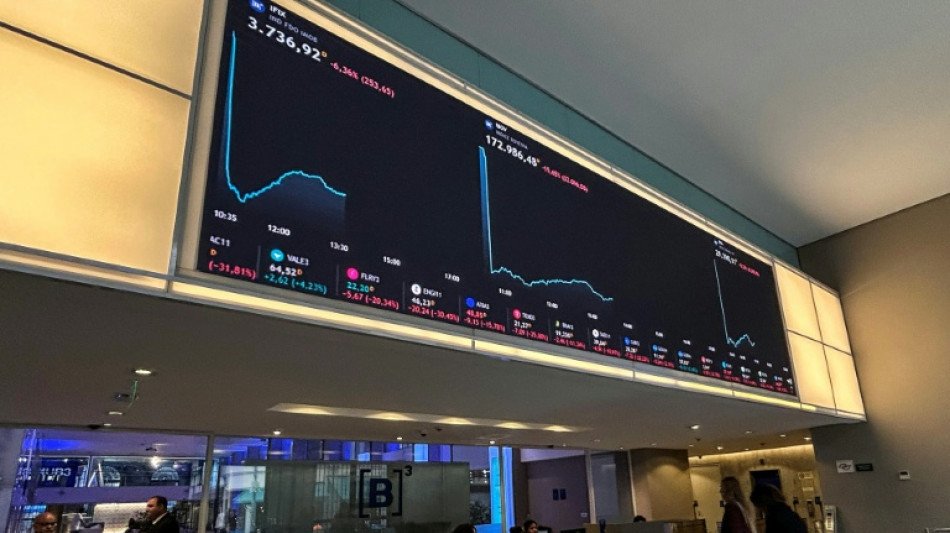
Lula win rattles Brazil markets over spending spree fears / Photo: Nelson ALMEIDA - AFP

The reelection of Brazilian leftist Luiz Inacio Lula da Silva rattled markets on Monday as investors, who had expected a win for his conservative rival, worried about fiscal discipline.
Sao Paulo's stock exchange, which had soared to new highs after Flavio Bolsonaro received the most first-round votes earlier this month, plunged 17 percent before slightly recovering to end the session down almost 14 percent.
The sharp decline in the benchmark Ibovespa index at one point triggered the first 30-minute halt to trading since the Covid pandemic in 2020.
Lula, who turns 81 on Tuesday, defied poll predictions to stage a dramatic comeback and win the runoff with 52 percent of the vote.
Bolsonaro, the 45-year-old son of far-right former president Jair Bolsonaro, had been seen as the more market-friendly candidate.
"No one had this result on their radar," Leandro Gabiati, of the political consultancy firm Dominium in Brasilia, told AFP.
It "comes as a major surprise to economic players who were already counting on a Flavio-led government and a political transition starting today," he added.
Alongside the stock market plunge, Brazil's currency, the real, dropped eight percent to the US dollar by close of day, after plunging as much as 12 percent earlier.
Against a backdrop of mounting fiscal pressures, Bolsonaro had promised to slash government spending and shrink the state.
However, he never gave details on where the cuts would come from, and vowed to maintain social programs.
- Brazil's fiscal woes -
The Brazilian state spends more than it collects, public debt exceeds 80 percent of GDP, and interest rates are at 13.75 -- one of the highest in the world.
Brazil's central bank in September lowered its growth forecast for the country in 2026 from two percent to 1.8 percent, with a further slowdown expected in 2027.
In the final stretch of his campaign, Lula rolled out costly measures, such as increasing the value of cash transfers to the poor or debt forgiveness for micro-entrepreneurs.
"Lula made several spending promises, and those need to be priced in," said Andre Perfeito, chief economist at the financial firm Garantia Capital.
"Sound fiscal reform is the price Lula 4.0 must pay to regain market confidence," said Mariano Machado, Americas Principal Analyst at global risk intelligence firm Verisk Maplecroft.
"A credible plan to restrain spending will set the tone for 2027 and beyond."
Gabiati said that the market will also need to await government appointments such as economy minister.
- Congressional constraint -
Lula is also facing an uphill battle to govern after sweeping wins by conservatives in Brazil's Congress.
Analysts point out that this could serve as a check against unchecked spending.
Also fuelling market jitters is Bolsonaro's reaction to the result.
He refused to concede defeat after voting was extended by two hours due to public transport issues in some cities.
Flavio Bolsonaro has also accused Lula of abuse of power for a flurry of announcements of more social spending during the campaign.
"So once the immediate election premium and Bolsonaro's challenge to the result are digested, the bigger question for Brazilian assets will be whether Lula can use that congressional constraint to establish a credible fiscal path," said economists from Deutsche Bank.
J.Schmidt--BVZ