Best Period Dramas: From Pride and Prejudice to Brideshead Revisited

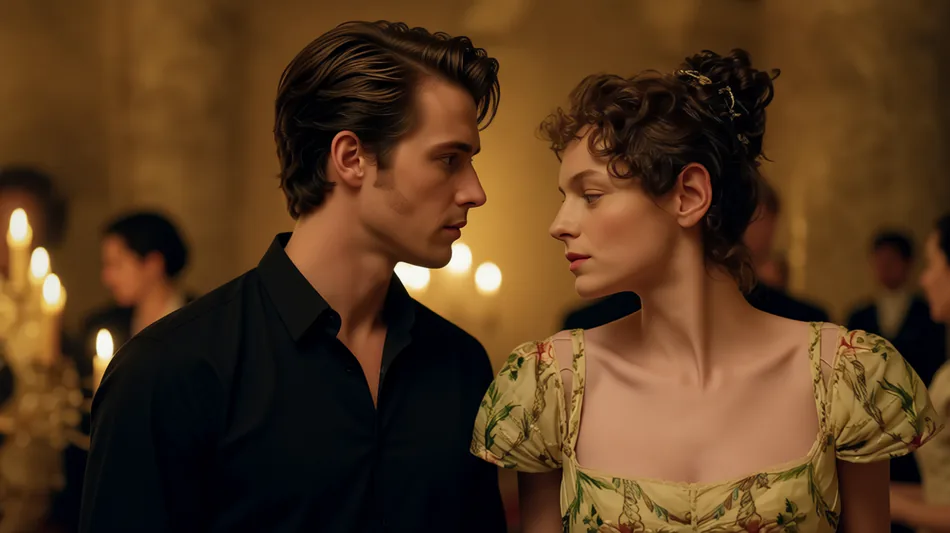
With the release of Dolly Alderton’s glitzy Netflix retelling of Jane Austen’s Pride and Prejudice, featuring Emma Corrin as Elizabeth Bennet and Jack Lowden as Mr. Darcy, attention turns to the legacy of the costume drama genre. Critics reflect on the most influential period pieces in television history, from the lavish scope of Brideshead Revisited to the gritty realism of Life on Mars.
As Dolly Alderton’s glitzy Netflix adaptation of Jane Austen’s Pride and Prejudice prepares to introduce a new generation to Elizabeth Bennet and Mr. Darcy, the television landscape is once again dominated by the allure of historical costume dramas. The upcoming series stars Emma Corrin as the spirited Elizabeth Bennet and Jack Lowden, who has been described as the "first ginger Mr Darcy," in a retelling that promises to bring Austen’s classic romance to life with modern production values.
The launch of this high-profile adaptation serves as a timely opportunity to examine the broader canon of period television. While Colin Firth’s iconic performance in the 1995 BBC version of Pride and Prejudice remains a cultural touchstone, particularly for its famous lake scene, the genre encompasses a vast array of eras, styles, and narrative approaches that have defined British and international television over the last four decades.
Brideshead Revisited stands as a foundational text in the evolution of the genre. Granada Television’s 1981 adaptation of Evelyn Waugh’s novel is credited with inventing a specific template for television period drama. Unlike earlier productions, which were often confined to stagey sets and limited budgets, Brideshead Revisited utilized cinematic scope and lavish locations, establishing a standard for production value that subsequent shows would strive to match. The series featured Jeremy Irons and Anthony Andrews as the central figures, supported by a cast of West End veterans including Laurence Olivier and John Gielgud. Over 11 episodes, the show depicted an Oxford student’s homoerotic friendship with an eccentric aristocrat and his dysfunctional family, creating a gilded template for future dramas that balanced personal drama with historical grandeur.
The 1995 adaptation of Pride and Prejudice, written by Andrew Davies, offered a different but equally impactful approach. While the source material presents Austen’s "brute romantic realities"—the pressure on five Bennet sisters to marry well to avoid genteel destitution—the script navigated these themes with a sharpness that resonated with 1990s audiences. The production leveraged the elegance of English aristocratic settings to create an atmosphere where social stakes felt both impossibly high and pitiably trivial. The chemistry between Colin Firth and Jennifer Ehle became central to the series’ success. Their portrayal of a slow-burning passion was described as essential to rescuing the narrative from its own potential dryness. Firth’s cultural impact was cemented by the lake scene, while Ehle’s performance was noted for its exquisite evocation of genuine feeling. The actors’ brief romantic involvement during and after filming was viewed by many as a natural extension of the fervor their characters generated.
Peter Straughan and Peter Kosminsky’s adaptation of Hilary Mantel’s Wolf Hall trilogy represents a different peak in the genre, focusing on historical accuracy and literary fidelity. The series adapted the first two volumes of Mantel’s work, detailing Thomas Cromwell’s rise and his role in Henry VIII’s split from Rome. Critics have praised the production for its ability to translate Mantel’s intricate prose without losing its luminosity. The show is noted for its beauty, delicacy, horror, and heartbreak, with every frame serving as an engine of story. It allows viewers to witness history unspooling in real time, standing as a testament to the power of art to recreate the past.
Andrew Davies returned to the period drama format with his adaptation of Charles Dickens’ Bleak House. The BBC series restored Dickens to the serial format that originally made him famous, broadcasting 15 taut, fog-ridden episodes twice weekly with cliffhanger endings. The production featured a massive cast, including Anna Maxwell Martin in her first lead role as Esther Summerson, Gillian Anderson as the haunting Lady Dedlock, Charles Dance as the terrifying lawyer Tulkinghorn, and Burn Gorman as the comically accurate Mr. Guppy. The series was described as a benchmark for gripping British period drama, with millions tuning in weekly to follow the outcome of the Jarndyce and Jarndyce legal case.
The genre is not limited to British settings. Mad Men, Matt Weiner’s saga set in the late 1950s and early 1960s, is cited as a proper period drama despite its American origin. The show is praised for its attention to costume detail, with every pocket square positioned precisely, but more importantly for its ability to make the era feel both alien and achingly close. The series explores themes of nostalgia, capitalism, sexism, and racism, seducing and repelling viewers with its vision of a not-so-distant past. It is described as an appealing but inadvisable drink that viewers cannot help but consume.
Lucinda Coxon’s 2011 adaptation of Michel Faber’s The Crimson Petal and the White offers a darker perspective on the period drama. The four-part series follows Sugar, a sex worker fueled by hatred for the men who abused her, and William Rackham, an ineffectual rich kid played by Chris O’Dowd. The story depicts Sugar’s rise through upper-class opportunities and William’s descent into a trap of his own making. The series is described as queasy, bilious, and furious, representing period drama at its nastiest.
Sally Wainwright’s feature drama about the Brontë sisters provides a biographical counterpoint to fictional narratives. Filmed in a replica of the Brontë parsonage and on Penistone Hill Country Park, the production focuses on Charlotte, Emily, and Anne Brontë, as well as their brother Branwell. The drama depicts the sisters’ fight to get published using pseudonyms and their desperate need to earn money as unmarried women. Finn Atkins, Chloe Pirrie, and Charlie Murphy are noted for their precise portrayals of the sisters, offering a raw and authentic experience of their lives.
Tipping is another significant entry in the genre, adapted from Sarah Waters’ debut novel. The 2002 series tells the story of Nan Astley, a Victorian music hall star and male impersonator whose lesbian awakening leads her through London’s bohemian society. The show is described as raucous, camp, and surprisingly sexually frank for its time. It is noted for casting pretty, overtly feminine women in roles that might today demand a more butch presence, but it remains a rare example of early 2000s drama that did not skirt around queerness. The series also features early performances by Benedict Cumberbatch and Sally Hawkins.
Peep Show’s creator Peter Flannery’s How Green Was My Valley is a nine-part adaptation of his own stage play, set in the north east of England during a period of civic corruption. The narrative spans 32 years before its transmission date. The show is praised for its spectacular costume and wig work, as well as its Dickensian characters. Four young actors—Gina McKee, Daniel Craig, Mark Strong, and Christopher Eccleston—delivered performances that became calling cards for their future careers. All four share a heavy shelf of Bafta, Emmy, Olivier, and Tony wins and nominations.
Red Riding is a three-part adaptation of David Peace’s trilogy, set in 1970s Britain and loosely inspired by the hunt for the Yorkshire Ripper. The series is described as riveted tightly to its time, with police stations resembling the inside of a smoker’s lung and straight-dealers ending up in metaphorical and literal ditches. The cast, including Andrew Garfield, Rebecca Hall, Sean Harris, Daniel Mays, Maxine Peake, and Paddy Considine, delivers an extraordinary performance in a relentlessly claustrophobic suite of desolation and corruption. Bodices and frilly frock coats are conspicuous by their absence.
Parade’s End, adapted from Ford Madox Ford’s quartet of novels, aired on BBC Two when the author was 16. The series follows Christopher Tietjens, a righteous aristocrat who serves in World War I. Tom Stoppard’s adaptation is praised for its expert handling of Ford’s twisty story. Benedict Cumberbatch plays Tietjens, Adelaide Clemens plays Valentine Wannop, and Anne-Marie Duff and Stephen Graham appear in supporting roles. Rebecca Hall, as Sylvia, Tietjens’s mesmerizing and manipulative wife, is highlighted as the show-stealer.
Life on Mars is described as a postmodern masterpiece that deconstructs the period drama genre. The BBC police procedural follows DCI Gene Hunt, played by Philip Glenister, and DI Sam Tyler, played by John Simm. The series explores whether Simm has time-traveled from 2006 or is comatose, dreaming. It encourages viewers to question every detail of the seductive 1970s setting, reflecting on nostalgia, the nature of reality, and the strangeness of the past. Twenty years after its airing, it remains a mindblowing relic.
Pride and Prejudice is available on Netflix from Thursday, December 3.
O.Pohl--BVZ