The Dilemma of Recording Live Music: Preserving Memories vs. Being Present
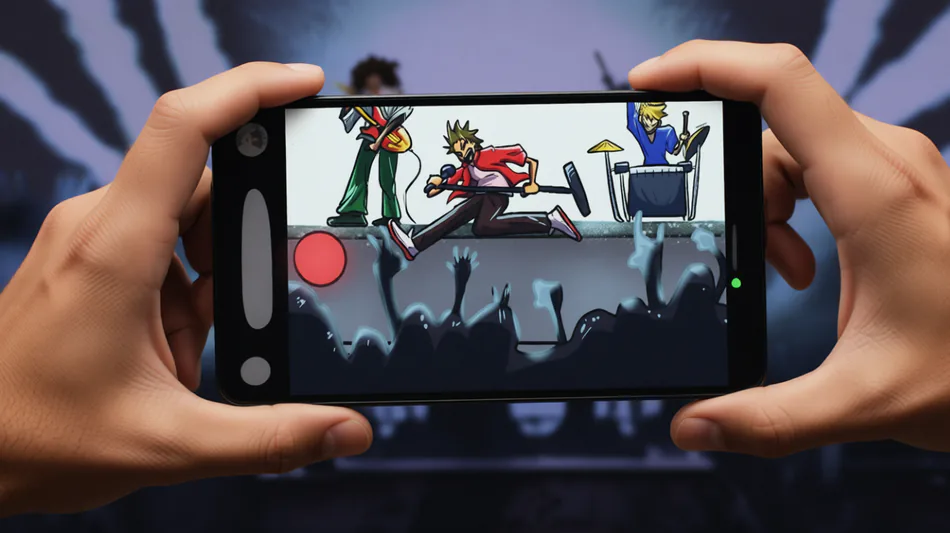
As smartphones become ubiquitous at live events, concert attendees face a growing dilemma: record the performance for later or immerse themselves in the moment. While some fans view recording as a way to preserve memories and signal their identity, others argue that the act of filming disrupts the communal connection that defines a live music experience.
The ability to document any moment with a single tap has transformed live music concerts from fleeting experiences into potential content. What was once an event defined by its immediacy and unrepeatable nature is now frequently mediated through camera lenses, raising questions about how recording affects the audience's engagement with the performance.
Chino Quentin, who performs with the musical project Dinosaur Computer, has observed this shift firsthand during his time in the live music scene. He notes that for major pop artists, fans often record from a distance rather than watching the show directly. "You can see these people that are front row with the artists and hundreds of people with their phones out, all recording the same exact moment," Quentin said.
Quentin pointed out that many large-scale artists have dedicated media teams who capture high-quality footage for official social media channels. Consequently, he argued that fans could simply put their phones away and still access those moments online later. However, during his own performances with Dinosaur Computer, Quentin observed a different pattern. He noted that while some fans record constantly, others capture only brief highlights to remember specific favorite moments of the evening.
The core issue, according to observers, is not the act of taking photos or recording a single song, but when documentation begins to replace active engagement with the performance. This tension is felt acutely by attendees who are torn between preserving memories and being present in the moment.
Mackenzie Mullen, a junior studying criminology and criminal justice, described an internal debate she experiences at concerts. "I get caught between a debate in my head of if I want to just put my phone away and capture the moment, or if I want to be able to live it through videos for a while after the concert," Mullen said. She acknowledged that both choices are valid but admitted she usually chooses to record because of the high cost of admission.
Beyond memory preservation, Mullen identified a social motivation for recording. She believes fans use concert footage to signal their identity and taste to others. "I think to show everybody, one, what kind of music they're listening to, and two, to show people that they were there, their outfits and the performance," she said. "They're building this perception of being the type of person that goes to a concert and the type of person that listens to the artist's music."
In response to the prevalence of phone use, some artists are implementing policies to restrict recording. Indie folk-rock musician Phoebe Bridgers provided Yondr pouches—lockable bags for phones and smartwatches—to attendees during "The Lost Tour" to prevent device use.
Sadie LaMagna, a sophomore studying public health who attended the tour, described the phoneless experience as a double-edged sword. She noted that while the lack of phones enhanced the concert experience, it also removed the ability to capture memories for later. "On one side, you want to be able to record and have those memories for later, but recording in the moment takes away a bit of being present there," LaMagna said.
Despite the initial discomfort of being disconnected from devices, LaMagna found that the benefits outweighed the unease. She observed that the absence of phones fostered a stronger sense of community among fans. "If you're in a crowd seeing everybody else's phones, it takes away from being united as fans," she said. "When there weren't any, you were a lot more united than you would have been at any other concert. That felt very special."
The debate highlights a broader cultural shift where the value of an experience is increasingly measured by its shareability online. As artists and audiences navigate this new landscape, the balance between documenting the moment and living in it remains a central point of contention for live music culture.
V.Schulte--BVZ