Bangladesh measles deaths near 500 but vaccines offer hope / Photo: Munir UZ ZAMAN - AFP

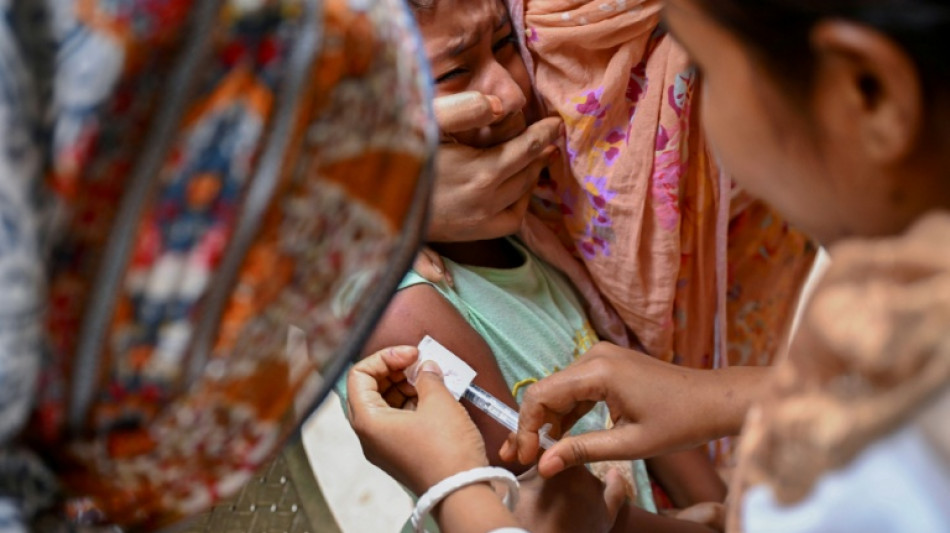
Bangladesh has rolled out a mass vaccination campaign to combat its deadliest measles outbreak in decades that has killed nearly 500 children in just two months, the United Nations children's agency said Wednesday.
Deaths are still rising, with six children dying in the past 24 hours alone, taking the toll from the preventable disaster to 481, according to health ministry figures.
But a nationwide immunisation drive has now reached 18 million children, UNICEF country chief Rana Flowers told reporters.
"The good news is 18 million children have been reached with measles vaccination," Flowers said.
Zahid Raihan, spokesman for the health department, said there were signs of improvement in the worst-affected areas where the outbreak hit hardest -- even if the full impact of the vaccinations would take time to be felt.
"Vaccinations will become effective four months after receiving the shots," he said.
The South Asian nation of 170 million people has been battling its worst measles outbreak since March 15, with more than 50,000 confirmed and suspected cases.
The highly contagious disease has affected children younger than nine months as well as older adults.
Measles impacts children the hardest.
Their breathing can become strained, their strength fades and in the most severe cases, the infection reaches the brain, causing swelling that can lead to lasting damage -- or death.
Gaps in vaccination coverage during and after the chaos of a 2024 uprising that overthrew the autocratic government left the youngest generation badly exposed.
"Bangladesh has gone through quite a transition over the last couple of years," Flowers said.
"The failure to order vaccines was not the result of a lack of money; it was the decision around how to procure them that created a delay," she added.
She stressed the need to strengthen vaccination programmes and increase funding for health facilities, surveillance and data systems in the future.
"We want to move to a place where routine vaccinations are working properly and reaching the children who need to be reached," Flowers said.
She suggested lessons must be learned about the dire failures that led to swathes of deaths, including delays in vaccine procurement.
"No outbreak emerges suddenly overnight," Flowers said, adding that the UN agency had sent five letters and held at least 10 meetings with previous governments warning of the risks.
A new government was elected in February, weeks before the outbreak began.
"There are always circumstances linked to it, particularly in the case of a vaccine-preventable outbreak," she said.
"So the after-action review is going to be critical."
I.Thomas--BVZ