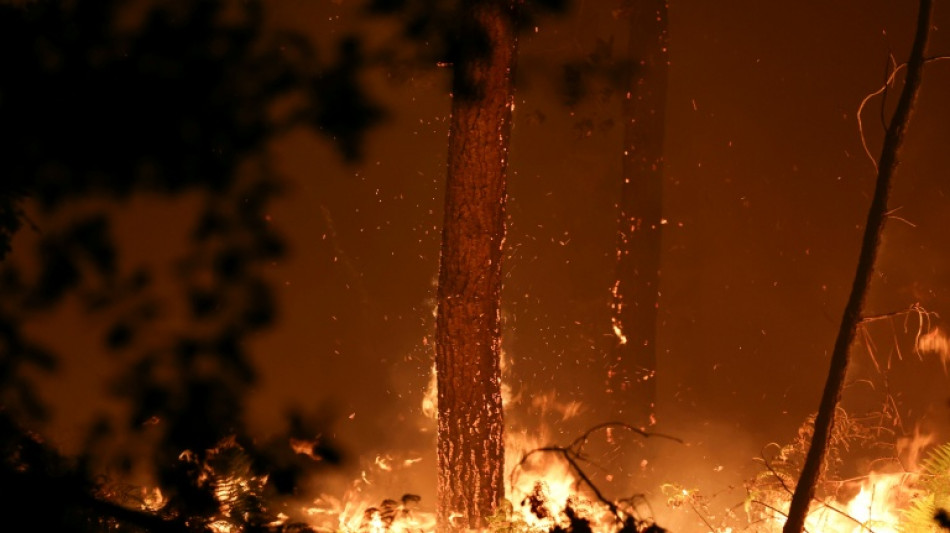
UN says world must navigate 'reality' of 1.5C overshoot / Photo: ROMAIN PERROCHEAU - AFP

The United Nations said Wednesday the 1.5C target would be missed and outlined how global temperatures might be brought back down in a first-of-its-kind assessment met with dismay in climate-vulnernable nations.
UN Secretary General Antonio Guterres last year acknowledged the inevitability of overshooting 1.5C in the next few years but this assessment is the first by a UN agency to unambiguously state the target would be breached.
Scientists agree that warming above 1.5C relative to pre-industrial times poses grave risks and nearly 200 nations committed a decade ago to try and keep global temperature rises to this safer threshold.
But in a much-anticipated report, the UN Environment Programme (UNEP) said the best remaining option had shifted "from avoiding overshoot to navigating it".
"It's a reality check. We have to live with this warmer world... but there's still a lot we can do to limit warming," said report co-author Richard Betts from the University of Exeter.
The report "was about responses rather than just sort of saying it is happening", he told journalists.
Fellow author Debra Roberts said it was important for policymakers "to realise the rules of the game are now changing".
"I think for me that's the clarion call... we now have to reconfigure our climate governance around dealing with an overshoot pathway. None of our plans are prepared for that," said Roberts from the University of KwaZulu-Natal.
- 'Dangerous waters' -
As heat-trapping emissions have climbed, UNEP had warned that meeting the 1.5C target was becoming increasingly unlikely.
But this latest report marks a departure, stating in no uncertain terms that "global action to cut greenhouse gas emissions has not been fast enough to avoid global warming crossing 1.5C".
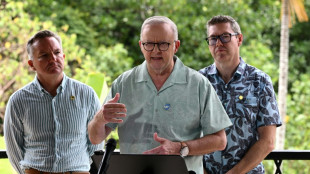
The blunt message "really struck those who live in low-lying atolls", said Maina Talia, the climate minister of Tuvalu, a Pacific nation among the most threatened by rising sea levels.
"We know for sure that climate change falls disproportionately on the Pacific countries. The costs that we have to bear in Tuvalu are incomparable to other countries," he said.
Marshall Islands climate envoy Tina Stege said "with the overshoot that is now certain ahead of us, we are fighting against a very strong current that's sweeping us into very dangerous waters".
Climate activists have rallied around 1.5C since it was affirmed as the more ambitious goal of the Paris Agreement a decade ago, and the UNEP report was met with frustration and disappointment.
"This is a heartbreaking moment, but overshoot is not the reason to give up and surrender 1.5C", said Jasper Inventor from Greenpeace International.
Bill Hare, a climate scientist and CEO of policy institute Climate Analytics, said the report "does a poor job of showing us that there is a way out" and risked becoming "a call to apathy".
Rachel Cleetus from the Union of Concerned Scientists described the failure to meet 1.5C as "heartbreaking and infuriating" and "a monumental climate injustice".
- No good outcomes -
The world has already warmed roughly 1.4C since 1850-1900 mostly from the burning of fossil fuels and the last three years have been the hottest on record.
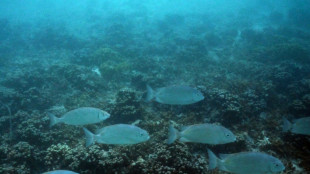
Scientists say any overshoot of 1.5C threatens more extreme weather and risks irreversible changes like the loss of ice sheets and coral reefs.
UNEP executive director Inger Andersen said there "are no good outcomes if we remain above 1.5C".
"Let's be very clear -- that 1.5C target is still the goal. But now, we need to approach it differently: from above," Andersen told journalists.
Even under the report's most optimistic scenario, global temperatures would still peak at 1.8C before falling to 1.5C by the end of the century.
But to achieve this, carbon dioxide removal -- the process of pulling carbon from the air -- would be required at enormous scale alongside major, rapid cuts to greenhouse gas emissions, the report said.
Guterres said on Wednesday that the "fight for 1.5C is the fight for humanity".
At present, carbon removal plays a vanishingly small part in tackling climate change and is strongly opposed by activists pushing instead for the phaseout of planet-warming fossil fuels.
"The only way to minimise harm is to cut emissions now... not to delay action with speculative techno-fixes," said Lili Fuhr from campaign organisation CIEL.
H.Wenzel--BVZ