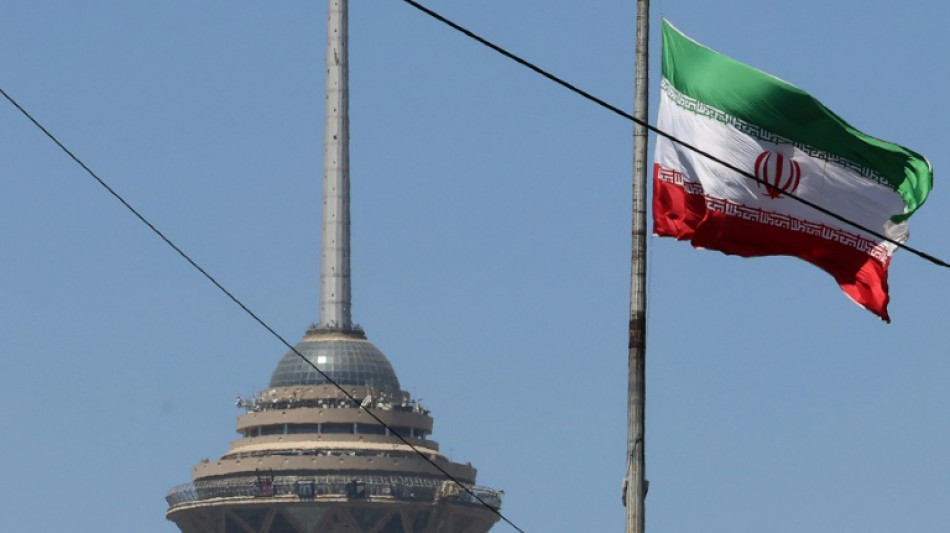
Iran and Trump talk down hopes of imminent peace deal / Photo: ATTA KENARE - AFP
Iran warned Monday that, while some progress had been made, it was not yet close to striking a deal with the United States to end the Middle East war, as US President Donald Trump also said he was in no hurry to sign.
World oil prices tumbled on renewed optimism about an agreement, after top US diplomat Marco Rubio suggested a deal could be reached within the day -- but Iran's foreign ministry spokesman responded: "No one can make such a claim."
Trump, meanwhile, took to his social media platform Truth Social to declare: "The deal with Iran will either be a great and meaningful one, or there will be no deal."
Pakistan's Prime Minister Shehbaz Sharif -- whose government is spearheading efforts to mediate a negotiated agreement between the United States and Iran -- met China's President Xi Jinping in Beijing.
US and Iranian forces have observed a ceasefire since April 8 while diplomats push for a negotiated settlement, although Iran has maintained controls on Gulf shipping through the Strait of Hormuz and the US Navy has sought to blockade Iran's ports.
"We thought we might have some news last night, maybe today," US Secretary of State Rubio told reporters during a visit to New Delhi, referring to hopes for a deal.
"We have what I think is a pretty solid thing on the table in terms of their ability to open up the straits, get the straits open," he said.
"We're either going to have a good agreement or we're going to have to deal with it another way. We'd prefer to have a good agreement," he said.
But in Tehran, foreign ministry spokesman Esmaeil Baqaei poured cold water on hopes for a quick final settlement.
- 'Certain fees' -
"It is correct to say that we have reached a conclusion on a large portion of the issues under discussion," he told a weekly news briefing.
"But to say that this means the signing of an agreement is imminent -- no one can make such a claim."
Baqaei stressed that Iran would continue to manage maritime traffic through the Strait of Hormuz by charging service fees -- arguing that this did not amount to Tehran "seeking to collect tolls".
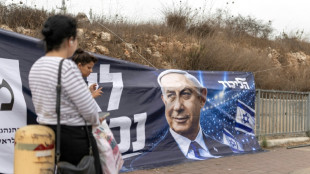
Israel's Prime Minister Benjamin Netanyahu said on Sunday that he and Trump had agreed that "any final agreement with Iran must eliminate the nuclear threat entirely."
Ali Vaez, director of the Iran Project at independent monitor the International Crisis Group, said Tehran may have weathered the US assault and feel able to declare a victory, but it would need hundreds of billions of dollars to repair its shattered economy.
"For Iran, the stakes are existential, for the United States they're short term," he said.
The US, he said, has also spent a fortune of its own and might have to settle for some "vague and pretty generalised promises on the nuclear front with the focus being on reopening the Strait of Hormuz, which wasn't even closed at the beginning of the conflict".
"So you have this situation in which basically, yes, both sides will get some of what they need in a memorandum of understanding, but this is coming at an astronomical cost for them and much better options were available to both sides without going through this devastating crisis," he said.
- 'Lasting peace' -
Iranian officials have stressed that, despite the long-standing US demand for an end to its uranium enrichment, talks on the issue of Iran's contested nuclear programme have been deferred until after an initial agreement.
The war, which erupted after the United States and Israel attacked the Islamic republic on February 28 and saw Iran respond with missile and drone attacks across the region, drove energy prices higher.
Crude oil remains expensive by recent standards, but prices have see-sawed and Monday's mood of relative optimism caused prices to plunge by almost five percent.
The price of North Sea Brent crude and West Texas Intermediate slipped to $99.00 and $92.10 a barrel respectively.
On Saturday, leaders from Saudi Arabia, the United Arab Emirates, Qatar, Egypt, Jordan and Bahrain, as well as representatives from Turkey and Pakistan, joined a call with Trump to discuss the deal.
The focus of international efforts moved to Beijing on Monday, where Pakistan's Sharif and army chief Asim Munir, who visited Tehran on Saturday, met senior leaders including Xi and Premier Li Qiang.
Speaking to Chinese leaders, Sharif said "the world is passing through a critical moment", Pakistan's state-run PTV channel showed.
"Things are moving in the right direction. I would like to thank China's support to promote peace."
B.L.Walter--BVZ