From graduation boos to voter unease: AI anxiety grows in the US / Photo: Karl Mondon - AFP

Speakers promoting AI are getting booed at universities, voters are rebelling against data centers, and even AI-friendly Trump administration officials are starting to retreat as an artificial intelligence backlash gathers pace across the United States.
The rapid spread of the emerging technology is seeing early enthusiasm give way to concerns about unemployment, rising costs, misinformation and security.
"People are thinking about what their future is going to look like. That existential fear is a very animating anxiety," said Christabel Randolph, acting executive director at the Center for AI and Digital Policy, a Washington-based think tank.
Former Google CEO Eric Schmidt got a taste of that feeling Friday when he was delivering a graduation speech at the University of Arizona.
Wearing a black academic gown and a tassel-topped cap, Schmidt urged students not to fear the AI-fueled technological transformation that he said will "touch every profession, every classroom, every hospital, every laboratory, every person and every relationship you have."
Instead of clapping, his speech prompted loud boos.
- Accept change 'or pay' -
According to opinion polling cited by the Semafor news outlet, 70 percent of Americans think AI is moving too fast, over 50 percent have negative views of it, and just 18 percent of young people feel hopeful about it.
With the US economy battered by stubborn inflation and the tech industry seeing AI-fueled layoffs, young Americans fear their costly university degrees, many paid for with large student loans, will be rendered useless by AI, leaving them without jobs and pay.
When Scott Borchetta, CEO of Big Machine Records, tried to tell Middle Tennessee State University graduates to embrace inevitable change, he too got a hostile reception.
"You can hear me now or you can pay me later," he quipped. "Do something about it, it's a tool, make it work for you."
Booing followed.
- 'Really, really angry' -
AI expansion is driving a massive build-out of data centers -- and that infrastructure is now becoming a political flashpoint.
Data centers consume large amounts of electricity and can raise utility costs, which has seen local officials supporting AI projects suffering losses at the ballot box in recent months. Some of the discontent has spilled into violence.
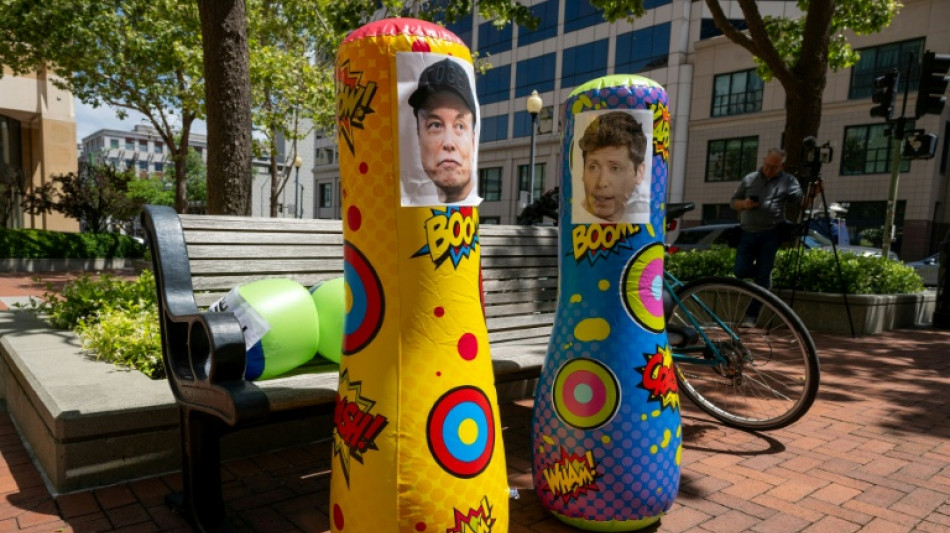
Last month, a young man threw a Molotov cocktail at the California home of OpenAI CEO Sam Altman. In a separate incident a few days earlier, a city council member in the state of Indiana had his door struck by gunfire after he expressed support for a data center construction project.
A note the attackers left under his doormat read "No Data Centers."
Randolph, the AI expert, cited a May Gallup poll showing that AI data centers are even less popular than nuclear power plants, with 71 percent of Americans opposing local AI data centers compared with 53 percent opposed to nearby nuclear plants.
"Americans are really, really angry and upset about AI data centers because of the noise, the pollution, the impact on their electricity bills, on water supplies," she told AFP, adding that AI expansion will be a key issue in the November midterms and possibly in the 2028 presidential vote.
"It's becoming a very relevant political issue," she added.
- 'Have to be careful' -
The Trump administration itself appears to be changing its stance.
Since returning to the White House in 2025, President Donald Trump has positioned himself as an advocate for rapid AI development, rolling back Biden-era safety requirements and dismissing regulation as a constraint on US competitiveness with China.
But in recent months, the administration announced that it wants to vet AI models before they are released, urged Congress to adopt nationwide regulations on AI and discussed AI guardrails with China.
Asked about the risks of AI on Fox News' "Mornings with Maria" program last month, Trump answered:
"There are a lot of good things, but we have to be careful with it."
D.Wolff--BVZ