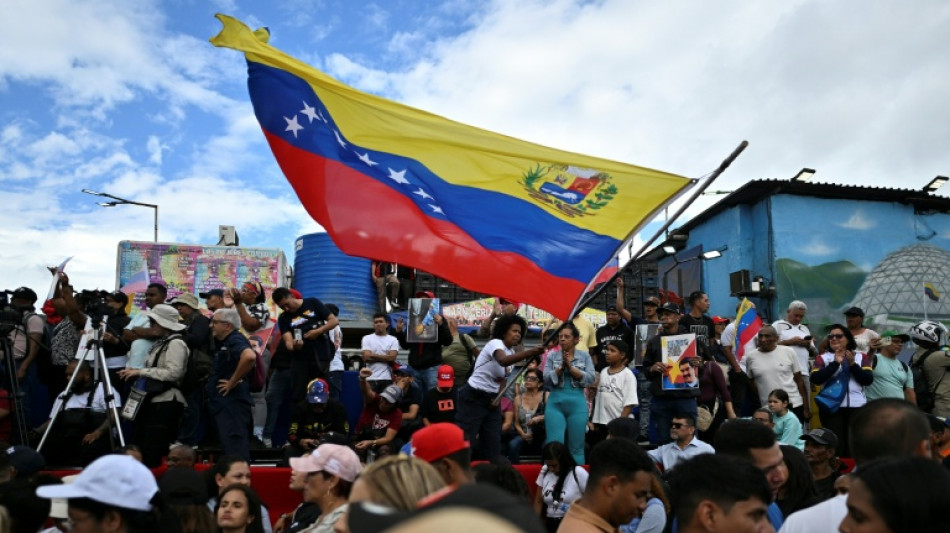
Maduro loyalists stage modest rally as Venezuelan govt courts US / Photo: Juan BARRETO - AFP
Supporters of Venezuela's deposed leader Nicolas Maduro staged protests Saturday, a week after his dramatic capture by US forces, but only hundreds turned out to demand his release as the interim government moved to revive ties with Washington.
Waving flags and placards with the face of the mustachioed ex-leader and his wife Cilia, around 1,000 protesters rallied in the west of Caracas and a few hundred in the eastern Petare district -- far smaller than demonstrations Maduro's camp has mustered in the past.
"I'll march as often as I have to until Nicolas and Cilia come back," said one demonstrator, Soledad Rodriguez, 69, of the presidential couple who were taken by US forces to New York to face trial on drug-trafficking charges.
"I trust blindly that they will come back -- they have been kidnapped."
Notably absent from the rallies were top figures from the government, which has said it is reviving diplomatic contact with Washington and discussing possible oil sales to the United States.
Interim president Delcy Rodriguez instead attended an agricultural fair, where she vowed in televised comments she would "not rest for a minute until we have our president back."
The other two hardline powers in the government, Interior Minister and street enforcer Diosdado Cabello, and Defense Minister Vladimir Padrino Lopez, were not seen at the demos either.
- Diplomatic maneuvers -
Despite the shock of Maduro's capture during deadly nighttime raids on January 3, signs emerged Friday of cooperation with Washington after US President Donald Trump's claim to be "in charge" of the South American country.
Washington said US diplomats visited Caracas on Friday to discuss reopening the American embassy.
A State Department official told AFP on Saturday they left again on Friday "as scheduled."
"The Trump Administration remains in close contact with interim authorities" in Venezuela, the official added.
The Venezuelan government did not reply when asked by AFP whether the US officials had met with Rodriguez.
She has pledged to cooperate with Trump over his demands for access to Venezuela's huge oil reserves.
But she also moved to placate the powerful pro-Maduro base by insisting Venezuela is not "subordinate" to Washington.
The US embassy in Colombia warned American citizens on Saturday that "the security situation in Venezuela remains fluid" and advised its nationals to leave the country "immediately" as commercial flights become available.
- Anxiety over prisoners -
Anxious relatives meanwhile camped outside jails, awaiting the promised release of political prisoners by the interim government.
Rodriguez's camp on Thursday began releasing prisoners jailed under Maduro, promising a "large" number would be freed in a gesture of appeasement that Washington took credit for.
However, prisoners' rights groups said on Saturday that fewer than 20 had been freed, including several prominent opposition figures.
Families slept out overnight under blankets near El Rodeo prison east of Caracas, hoping for the release of their loved ones.
"I am tired and angry," Nebraska Rivas, 57, told AFP, as she waited for her son to be released.
"But I have faith that they will hand him over to us soon," she said, after sleeping out on the pavement for two nights.
- Oil talks -
Following Maduro's capture, Trump vowed to secure access for US companies to Venezuela's vast oil reserves.
Chevron is currently the only US firm licensed to operate in Venezuela, through a sanctions exemption.
At a White House meeting on Friday, he pressed top oil executives to invest in Venezuela's reserves, but was met with a cautious reception.
ExxonMobil chief executive Darren Woods dismissed the country as "uninvestable" without sweeping reforms.
Experts say Venezuela's oil infrastructure is creaky after years of mismanagement and sanctions.
N.Brandt--BVZ