New storms threaten Grand Canyon flood search, 2 bodies recovered / Photo: J.THOMPSON, Handout - NATIONAL PARK SERVICE/AFP

Forecasted storms in the Grand Canyon on Monday threatened efforts to find more than a dozen people missing after flash floods over the weekend, the National Park Service (NPS) said, with two bodies already recovered.
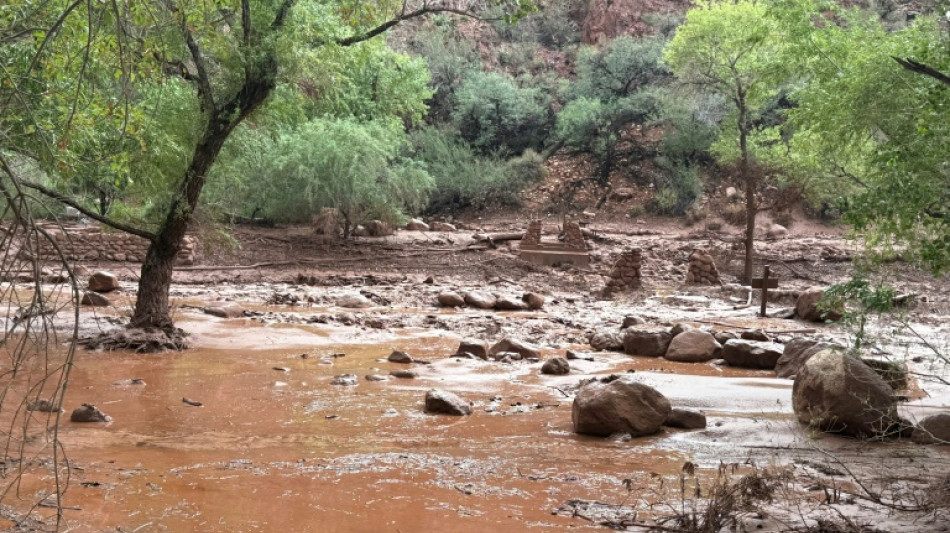
The floods hit the iconic US park's Bright Angel Canyon and Phantom Ranch area on Saturday afternoon, forcing dozens of people to evacuate and damaging the sole water pipeline serving the area.
The body of a 46-year-old man was recovered on Sunday evening, the park service said.
The NPS said on Monday that a second body had been recovered, while warning that "forecasted weather may affect the timing and pace" or further search operations.
The National Weather Service said that rain and thunderstorms were expected again Monday afternoon.
"Flash flooding will be possible in creeks, normally dry washes, swimming holes, and over recently burned areas. Raging killer currents will be possible in side canyons and narrow slot canyons. Low-water crossings may be flooded," it said in a bulletin.
Video footage taken over the weekend by hikers showed a torrent of muddy water rushing by trails and under footbridges as well as logs and other debris floating down swollen rivers, accompanied by a rumbling roar.
The park service said it was working with Arizona authorities to evacuate people and account for missing individuals.
As of Sunday morning, 62 people had been evacuated, with others scheduled for later, it said.
It said around 15 people were thought to be missing.
- Water pipeline damaged -
The flooding damaged or destroyed 40 percent of the Transcanyon Waterline, a key water pipeline into Grand Canyon National Park, the park service said Monday.
It announced water restrictions in its most visited area and a ban on wood and charcoal fires.
The twelve-and-a-half-mile (20 kilometers) pipeline runs from the Roaring Springs source on the North Rim to the South Rim, providing drinking water and fire suppression, according to the park's website.
The flooding also resulted in "significant impacts to infrastructure," destroying footbridges and blocking hikers from crossing Bright Angel Creek, the park service said.
Flash floods are common in Northern Arizona because the arid, sparsely vegetated environments there have little capacity to absorb rain, the park's website said, urging visitors to be especially cautious from July to mid-September.
The Grand Canyon -- considered one of the greatest wonders of the natural world -- is the result of the Colorado River eating away at layers of red sandstone and other rock for millions of years, leaving a chasm up to 18 miles wide and more than a mile deep.
Last year almost five million people visited the site.
H.Lange--BVZ