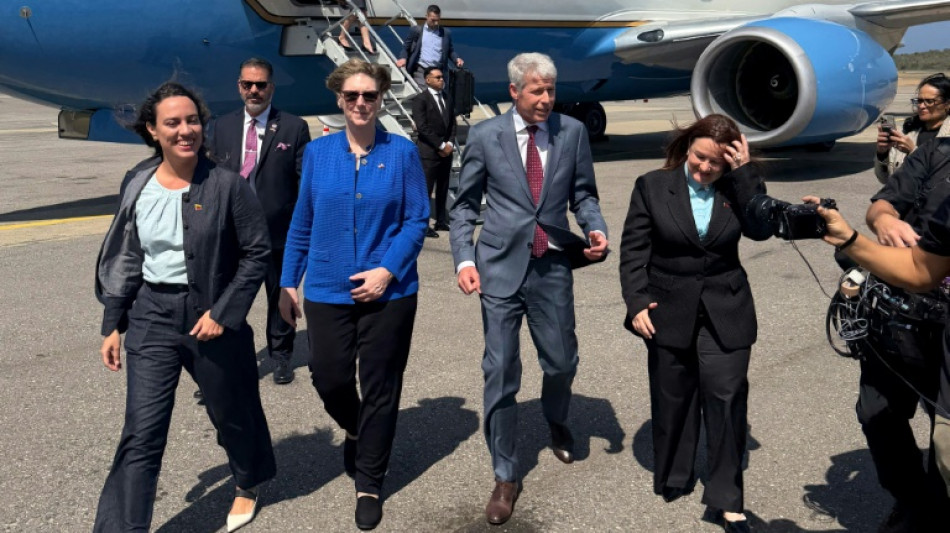
US top official in Venezuela for oil talks after leader's ouster / Photo: Handout - US Embassy in Venezuela/AFP
US Energy Secretary Chris Wright was in Venezuela on Wednesday for talks with acting president Delcy Rodriguez and oil industry executives on harnessing the country's vast reserves of crude.
Wright is the highest-ranking official in President Donald Trump's administration to travel to Venezuela since US special forces seized and overthrew longtime socialist leader Nicolas Maduro on January 3.
Trump has backed Maduro's former deputy Rodriguez as his interim successor on condition she abides by Washington's demands, including granting the United States access to Venezuelan oil and easing state repression.
Welcoming Wright to Venezuela, the US embassy wrote on X: "Your visit is key to advancing @POTUS's (Trump's) vision of a prosperous Venezuela."
It added: "the US private sector will be essential to boost the oil sector, modernize the electric grid, and unlock Venezuela's enormous potential."
A photo posted by the embassy showed Wright on the tarmac at Maiquetia International Airport, which serves the capital Caracas, accompanied by the new US charge d'affaires in Venezuela, Laura Dogu.
The US Department of Energy said Wright would visit Venezuelan oil fields on his trip, which seeks to "advance President Trump's mission to restore prosperity, safety, and security for Venezuela, the United States, and the entire Western Hemisphere."
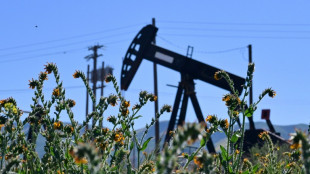
Venezuela, once a major crude supplier to the Untied States, has the world's largest proven reserves with more than 303 billion barrels, according to global oil cartel OPEC.
This amounts to about a fifth of the world's oil reserves.
But in 2024, the South American country produced only about one percent of the world's total crude output, said OPEC, its industry left haggard by years of underinvestment, mismanagement and US sanctions.
Washington eased sanctions on Venezuelan oil last month after Rodriguez's administration passed a law throwing the state-run sector open to private investment.
Trump wants US oil majors to rapidly rebuild the sector and boost output by millions of barrels per day.
Trump has said the United States and Caracas would share oil profits.
"We're going to be selling a lot of oil, and we'll take some, and they'll take a lot, and they're going to do very well. They're going to make more money than they've ever made, and it's going to be beneficial to us," the Republican said this month.
- 'New relationship' -
Wright, in a recent interview with US outlet Politico, welcomed the passing of Venezuela's new hydrocarbons law, which loosens the state's grip on the commodity that is Venezuela's main source of revenue.
"The legislation that was passed quite rapidly, I think you can see as a gesture of improvement already very early on in this new relationship between the US and Venezuela," he said.
"They want to see investment coming into Venezuela as much as we want to see investment coming into Venezuela," added Wright.
Washington took further steps Tuesday to ease restrictions on Venezuela's oil industry, under sanctions since 2019.
The US Treasury Department issued a license allowing some transactions involving Venezuela's government, as well as state oil firm PDVSA, to provide goods, tech and software "for the exploration, development, or production of oil or gas" in the country.
The challenge now is to persuade oil companies to invest in Venezuela despite persisting political instability, security concerns, and the need for heavy investment to restore production capacity.
The Wright meeting "aims to establish a constructive and mutually beneficial agenda for both nations, within the framework of energy sovereignty and historic bilateral relations," the PDVSA said on Telegram.
Venezuela under Rodriguez, who also serves as hydrocarbons minister, aims to increase crude output by 18 percent in 2026.
The country produced 1.2 million oil barrels per day in 2025 -- up from a historic low of about 360,000 in 2020 -- but still far from the 3.0 million bpd it was pumping 25 years ago.
A.L.Peter--BVZ