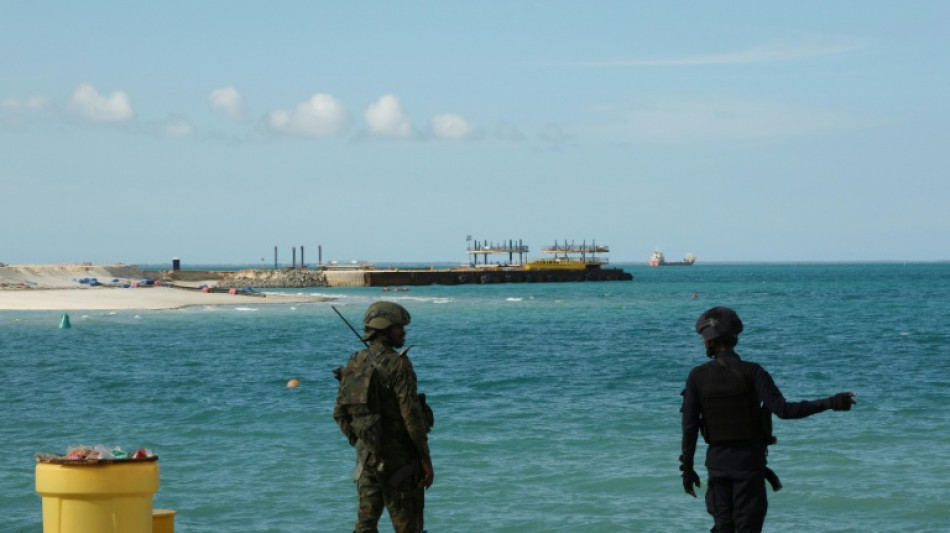
Northern Mozambique: massive gas potential in an insurgency zone / Photo: Camille LAFFONT - AFP/File
Construction on a stalled $20-billion gas project by TotalEnergies in Mozambique officially resumed Thursday, nearly five years after it was suspended due to a deadly jihadist attack.
The French oil giant announced the restart of construction at a ceremony attended by President Daniel Chapo and TotalEnergies chief executive Patrick Pouyanne near the site of the project in Mozambique's northern Afungi peninsula.
- Massive reserves -
Vast natural gas deposits were discovered off the coast of Mozambique's northern Cabo Delgado province in 2010, potentially positioning the impoverished southern African country as a major player in the global liquefied natural gas (LNG) market.
The find raised hopes that Mozambique -- where more than 80 percent of the population lives in poverty -- could become an African version of wealthy Qatar.
The African Development Bank estimated in 2018 the reserves at more than 5,000 billion cubic metres of gas -- enough to supply the United Kingdom, France, Germany and Italy for nearly 20 years.
Civil society and environmental groups led by local NGO Justica Ambiental have decried a "gas rush" as a "climate bomb" in a country considered extremely vulnerable to climate change.
- Multiple multinational projects -
TotalEnergies is the lead partner in the Mozambique LNG consortium, with a 26.5-percent stake. Pouyanne has said he hoped it would begin production in 2029.
Another project led by US giant ExxonMobil was also suspended following the 2021 attack that claimed an estimated 800 lives. It resumed construction in November and is expected to begin production in 2030.
TotalEnergies and ExxonMobil's projects require onshore facilities to liquefy the gas so it can be transported by sea.
The first exports of LNG from the area began in November 2022 from the Coral Sul offshore plant run by Italy's energy company Eni, which only has a quarter of the production capacity of the TotalEnergies site.
"The country's vast gas reserves could make Mozambique a top 10 global producer, responsible for 20 percent of Africa's output by 2040," according to a 2024 report by financial experts Deloitte.
- Insurgency -
Northern Mozambique has been ravaged since October 2017 by attacks by an Islamic State-linked group that seeks to impose Sharia law in Cabo Delgado, a neglected outpost on the border with Tanzania.
In March 2021, the insurgents attacked the port town of Palma, a few kilometres from the TotalEnergies site, sending thousands of people fleeing into the surrounding forest.
Conflict tracker ACLED estimated more than 800 people were killed.
French prosecutors opened a manslaughter investigation against TotalEnergies after allegations that it failed to protect its subcontractors in the area, some of whom were among the dead.
The European Center for Constitutional and Human Rights, a German NGO, filed a legal complaint against TotalEnergies in November accusing it of complicity in alleged abuses by local troops in a task force deployed to protect TotalEnergies gas site.
Mozambique's National Human Rights Commission reportedly stated this month it had not found evidence of any such violations.
TotalEnergies rejects all these accusations.
The violence escalated in 2025, causing more than 100,000 people to flee their homes in the 10 months to October, the UN refugee agency said.
ACLED estimates the conflict has claimed more than 6,400 lives since 2017.
Rwandan troops were deployed alongside Mozambican forces in 2021 but regular attacks continue, including kidnappings and beheadings of locals.
N.Brandt--BVZ