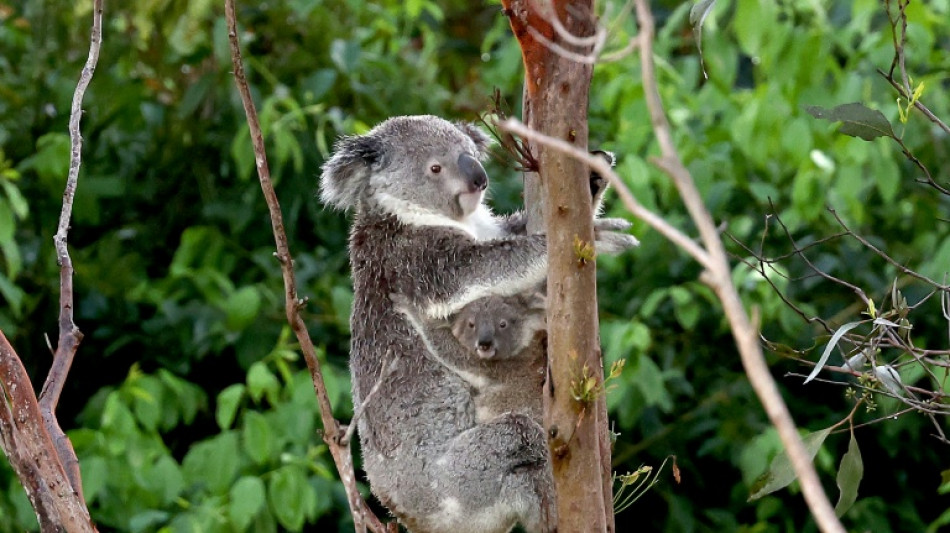
Even moderately hot days raise risk of koala deaths: study / Photo: DAVID GRAY - AFP/File

Koalas can endure tough conditions in the Australian bush but prolonged exposure to even moderately hot weather can increase their risk of heat-related death, researchers said on Wednesday.
The findings, based on more than 20 years of data of koala rescues, underscore the threat facing not just humans but wildlife as climate change makes heatwaves more frequent and intense.
Researchers found the odds of adult koalas being admitted into care or dying in the Australian state of New South Wales rose when average maximum temperatures over a seven-day period reached 27C.
At 30C or above, those risks "were between 1.5 and 3.5 times higher compared to conditions around 25C", said Valentina Mella, lead author of the study published in Biology Letters.
"Our findings suggest that even what might seem like moderate heat can become physiologically stressful when it is sustained over time," Mella, from the University of Sydney, told AFP.
On hotter days, koalas regulate body temperature by hugging trees to dissipate heat or seeking out denser foliage and lower trees away from direct sunlight.
The herbivorous marsupial can also reabsorb water from the colon and produce more concentrated urine to preserve hydration, or allow its body temperature to fluctuate with the environment in a process known as heterothermy.
But while they can survive conditions above 40C for a limited time, even prolonged exposure at much lower temperatures "appears to significantly compromise their health and survival", Mella said.
- Sedentary and vulnerable -
Researchers adapted a technique widely used to study heat and human health to establish the first "statistically validated association between ambient temperature and koala mortality", the study said.
They analysed nearly 12,000 records of koala admissions and mortality available from rescue organisations and koala hospitals in NSW between 2000 and 2022.
The findings support the evidence that rising temperatures and climate-driven heatwaves are a key threat to wildlife health and survival.
Temperatures once rare are becoming more common, particularly during summer, Mella said, meaning koalas "are likely to experience heat stress conditions more regularly and over longer periods each year".
Koalas remain particularly vulnerable to climate change, even while some other wildlife adapt by switching diets or shifting habitats.
A largely sedentary and inflexible creature, dependent on eucalyptus leaves for much of their water, koalas quickly develop dehydration when hotter conditions persist.
But habitat fragmentation can also prevent them from reaching cooler areas in hotter times, said Mella.
Those with chlamydiosis -- a major disease affecting koalas -- were at greater risk, suggesting heat stress may compound the effects of this condition.
The increasing frequency and intensity of hot days in Australia pose a "significant threat" to endangered inland northwest koala populations at greatest risk of heat exposure, the study said.
Mella said that protecting large, shade-producing trees or providing access to water during heatwaves could help reduce dehydration risk among koalas.
"Without proactive intervention, the continued rise in extreme heat events could push already vulnerable koala populations closer to extinction," the study said.
C.Kramer--BVZ